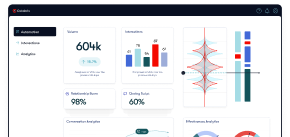
Contact center performance analytics refers to the systematic evaluation of data collected from customer interactions to enhance service delivery and operational efficiency. This process involves analyzing various metrics to improve customer satisfaction and drive business growth.
Understanding Contact Center Performance Analytics
Contact center performance analytics is a critical component of modern customer service strategies. By leveraging data, organizations can gain insights into agent performance, customer interactions, and overall operational efficiency. This analysis not only helps in identifying areas for improvement but also supports strategic decision-making.
Key Metrics in Performance Analytics
Performance analytics encompasses a variety of metrics that provide a comprehensive view of contact center operations. Some of the most important metrics include:
- Average Handle Time (AHT): This metric measures the average duration taken to resolve customer inquiries, including talk time and hold time.
- First Call Resolution (FCR): FCR indicates the percentage of customer issues resolved on the first interaction, reflecting the effectiveness of the service provided.
- Customer Satisfaction Score (CSAT): This score gauges customer satisfaction through surveys and feedback, providing direct insights into service quality.
- Net Promoter Score (NPS): NPS measures customer loyalty and the likelihood of recommending the service to others, serving as a key indicator of overall customer sentiment.
The Role of Technology in Performance Analytics
Technology plays a pivotal role in enhancing contact center performance analytics. Advanced tools and software solutions enable organizations to collect, analyze, and visualize data effectively. Key technologies include:
- Speech Analytics: This technology analyzes customer interactions to extract valuable insights, helping organizations improve service quality and customer satisfaction.
- Omnichannel Analytics: By integrating data from various communication channels, omnichannel analytics provides a holistic view of customer interactions, leading to better decision-making.
- Real-Time Dashboards: These dashboards offer instant visibility into performance metrics, allowing managers to monitor operations and make data-driven adjustments on the fly.
Benefits of Implementing Performance Analytics
Implementing performance analytics in contact centers yields numerous benefits that can significantly enhance customer experience and operational efficiency. Organizations that prioritize analytics can expect to see measurable improvements across various dimensions.
Improved Customer Satisfaction
One of the primary benefits of performance analytics is the enhancement of customer satisfaction. By analyzing customer interactions, organizations can identify pain points and areas for improvement. For instance, companies that implement speech analytics can expect to see an improvement in customer satisfaction scores of at least 10%, as noted by McKinsey.
Increased Operational Efficiency
Performance analytics also contributes to increased operational efficiency. By understanding agent performance and customer behavior, organizations can streamline processes, reduce handle times, and optimize resource allocation. This leads to cost savings, with some companies reporting reductions between 20% and 30% in operational costs.
Enhanced Sales Opportunities
Analytics can uncover sales opportunities that may otherwise go unnoticed. Companies that adopt omnichannel analytics solutions have reported a 23% increase in cross-sell and upsell conversion rates compared to those relying on single-channel data analysis. This highlights the importance of a comprehensive approach to customer interactions.
Challenges in Performance Analytics
While the benefits of performance analytics are significant, organizations may face challenges in its implementation. Understanding these challenges is crucial for successful integration into contact center operations.
Data Integration Issues
One of the primary challenges is the integration of data from various sources. Many contact centers operate across multiple channels, and consolidating this data into a single view can be complex. Organizations must invest in robust analytics platforms that can handle diverse data streams effectively.
Change Management
Implementing performance analytics often requires a cultural shift within the organization. Employees may resist changes to established processes, making it essential for management to foster a data-driven culture that emphasizes the value of analytics in enhancing customer service.
Future Trends in Contact Center Performance Analytics
The landscape of contact center performance analytics is continually evolving. Staying ahead of trends is vital for organizations looking to maintain a competitive edge.
Artificial Intelligence and Machine Learning
Artificial intelligence (AI) and machine learning (ML) are set to revolutionize performance analytics. These technologies can analyze vast amounts of data quickly, providing deeper insights and predictive analytics that can inform strategic decisions. As AI continues to advance, its integration into contact center operations will become increasingly prevalent.
Increased Focus on Customer Experience
As customer expectations continue to rise, organizations will place greater emphasis on enhancing the customer experience through analytics. In 2023, around 74% of enterprises cited improving customer experience (CX) as their top priority for deploying contact center analytics, indicating a shift towards customer-centric strategies.
FAQs
What is the purpose of contact center performance analytics?
The purpose of contact center performance analytics is to evaluate data from customer interactions to improve service delivery, enhance customer satisfaction, and drive operational efficiency.
How can performance analytics improve customer satisfaction?
Performance analytics can improve customer satisfaction by identifying pain points in the customer journey, enabling organizations to make data-driven improvements to service quality.
What metrics are essential for performance analytics?
Essential metrics for performance analytics include Average Handle Time (AHT), First Call Resolution (FCR), Customer Satisfaction Score (CSAT), and Net Promoter Score (NPS).
What role does technology play in performance analytics?
Technology plays a crucial role in performance analytics by enabling the collection, analysis, and visualization of data, thus facilitating informed decision-making and operational improvements.
What are the future trends in contact center performance analytics?
Future trends include the integration of artificial intelligence and machine learning for deeper insights, as well as an increased focus on enhancing customer experience through data-driven strategies.
Transform Your Contact Center Performance with Calabrio
As you explore the future of contact center performance analytics, consider the power of a solution that offers not just data, but actionable insights. Calabrio is at the forefront of this evolution, providing an intuitive platform that drives significant improvements in customer interaction metrics. With proven results like 19% improvements in answer rates and 80% reductions in handle time, Calabrio is the partner you need to elevate your contact center’s efficiency and effectiveness. Don’t settle for the status quo. Book a demo today and experience how Calabrio can transform your contact center performance with simplicity and sophistication.