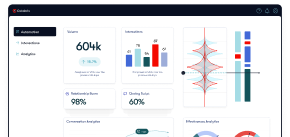
Customer journey management (CJM) is the strategic approach that organizations use to oversee and enhance the interactions customers have with their brand throughout their entire relationship. This process is essential for improving customer satisfaction and loyalty.
Understanding Customer Journey Management
Customer journey management involves mapping out the various touchpoints a customer encounters, from initial awareness to post-purchase interactions. By analyzing these stages, businesses can identify opportunities for improvement and create a seamless experience.
The Importance of Customer Journey Mapping
Mapping the customer journey is crucial for understanding how customers perceive their interactions with a brand. This process allows companies to visualize the entire experience, highlighting areas where customers may face challenges or frustrations.
According to a study, 86% of customers are willing to pay more for a better customer experience, emphasizing the need for effective journey management. By focusing on these experiences, businesses can drive customer loyalty and increase revenue.
Key Stages of the Customer Journey
The customer journey typically consists of several key stages:
- Aware: The customer becomes aware of a product or service.
- Consideration: The customer evaluates options and considers making a purchase.
- Purchase: The customer completes the transaction.
- Retention: The customer engages with the brand post-purchase.
- Advocacy: The customer recommends the brand to others.
Each of these stages presents unique opportunities for businesses to enhance the customer experience and foster loyalty.
Technological Integration in Customer Journey Management
Modern customer journey management relies heavily on technology to track and analyze customer interactions. Tools such as Customer Journey Analytics enable businesses to gather data from various touchpoints, providing insights into customer behavior and preferences.
AI-Driven Enhancements
Recent developments in artificial intelligence have transformed customer journey management. For instance, Salesforce’s introduction of AI-driven features in its Customer 360 platform enhances Customer Journey Analytics capabilities, allowing businesses to personalize experiences more effectively.
These advancements enable companies to predict customer needs and tailor interactions accordingly, ultimately leading to improved satisfaction and loyalty.
Data-Driven Decision Making
Data plays a pivotal role in customer journey management. By analyzing customer feedback and behavior, organizations can make informed decisions that enhance the overall experience. Companies with mature customer success programs achieve 12% higher revenue growth and 19% higher gross margins compared to those without formal initiatives.
This data-driven approach not only improves customer satisfaction but also contributes to the bottom line, making it a critical component of any successful business strategy.
Benefits of Effective Customer Journey Management
Implementing a robust customer journey management strategy offers numerous benefits for organizations. These include:
- Enhanced Customer Satisfaction: By addressing pain points and improving interactions, businesses can significantly boost customer satisfaction levels.
- Increased Loyalty: Satisfied customers are more likely to return and recommend the brand to others, fostering loyalty.
- Higher Revenue Growth: Companies that prioritize customer experience often see a direct correlation with revenue growth.
Personalization as a Key Driver
Personalization is a critical aspect of customer journey management. As the global Customer Journey Analytics market is projected to reach USD 59.4 billion by 2032, driven by the increasing demand for personalized experiences, businesses must adapt to meet these expectations.
By leveraging data to create tailored experiences, organizations can differentiate themselves in a competitive market, ultimately leading to greater customer retention and advocacy.
Measuring Success in Customer Journey Management
To gauge the effectiveness of customer journey management efforts, businesses should establish key performance indicators (KPIs). These may include customer satisfaction scores, Net Promoter Scores (NPS), and customer retention rates.
Regularly monitoring these metrics allows organizations to assess their performance and make necessary adjustments to their strategies, ensuring continuous improvement in the customer experience.
FAQs
What is the role of technology in customer journey management?
Technology plays a crucial role in customer journey management by enabling businesses to track and analyze customer interactions across various touchpoints, facilitating data-driven decision-making and personalized experiences.
How can businesses improve their customer journey?
Businesses can improve their customer journey by mapping out touchpoints, gathering customer feedback, leveraging data analytics, and implementing personalized strategies to enhance the overall experience.
What are the benefits of customer journey mapping?
Customer journey mapping helps organizations identify pain points, enhance customer satisfaction, increase loyalty, and drive revenue growth by providing a clear understanding of customer interactions.
Why is personalization important in customer journey management?
Personalization is essential in customer journey management as it allows businesses to tailor experiences to individual customer preferences, leading to higher satisfaction, loyalty, and advocacy.
How can companies measure the success of their customer journey management efforts?
Companies can measure the success of their customer journey management efforts by tracking key performance indicators such as customer satisfaction scores, Net Promoter Scores (NPS), and customer retention rates.
Take the Next Step in Customer Journey Management with Calabrio
Understanding and managing your customer’s journey is crucial for enhancing satisfaction and loyalty. With Calabrio’s balanced platform, you can achieve remarkable improvements in your contact center’s performance. Experience a 19% improvement in answer rates, an 80% reduction in handle time, and a 20% increase in scheduling efficiency. Don’t let the limitations of other solutions hold you back. Book a demo today and discover how Calabrio can elevate your customer journey management to the next level.