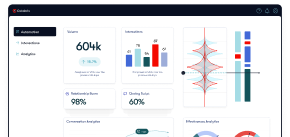
An agent desktop is a unified software interface that provides contact center agents with all the tools, information, and applications they need to effectively handle customer interactions. More than just a simple application, the modern agent desktop serves as a comprehensive workspace that consolidates customer data, communication channels, knowledge bases, and performance metrics into a single, intuitive interface.
Rather than forcing agents to juggle multiple applications and systems, the agent desktop creates a streamlined environment where everything needed to deliver exceptional customer service is accessible within one platform. This unified approach directly impacts agent productivity, with studies showing that call center productivity can improve significantly when agents spend more time on productive activities rather than navigating between systems.
Core Components and Features
Modern agent desktops have evolved far beyond basic call handling to become sophisticated workflow management systems that support today’s omnichannel contact center environment.
Customer Information Hub: The desktop provides a 360-degree view of customer data, including contact details, interaction history, purchase records, and account status. This comprehensive customer profile enables agents to personalize interactions and resolve issues more efficiently.
Communication Control: Essential call control features including dial, hold, transfer, and hang-up functions are prominently displayed, along with status management tools that allow agents to indicate availability, breaks, or training sessions through simple dropdown menus.
Channel Management: Unified agent desktops support multiple communication channels—phone, email, chat, social media, and messaging—through tabbed interfaces that allow agents to switch seamlessly between different types of customer interactions.
Knowledge Integration: Built-in access to knowledge bases, product information, policies, and support forums ensures agents have immediate access to the information needed to resolve customer inquiries without leaving their workspace.
Performance Dashboards: Real-time statistics display individual and team performance metrics, helping agents track their productivity and work toward improvement goals.
Productivity and Business Impact
The agent desktop’s design directly correlates with contact center efficiency and agent performance. Research indicates that agents with access to unified, well-designed desktops demonstrate significantly higher productivity levels.
Reduced Handle Times: When agents have all necessary information readily available, average handle time decreases. Studies show that streamlined interfaces can reduce handle times by 1-2 minutes per interaction, which translates to substantial cost savings across large contact centers.
Improved First Call Resolution: Access to comprehensive customer history and integrated knowledge bases enables agents to resolve issues more effectively on the first contact. Industry benchmarks show that FCR rates above 80% are considered exceptional, and unified desktops play a crucial role in achieving these levels.
Enhanced Agent Satisfaction: Well-designed desktops reduce frustration and cognitive load, contributing to higher agent satisfaction and lower turnover rates. When agents can focus on helping customers rather than struggling with technology, job satisfaction naturally improves.
Operational Cost Efficiency: By consolidating multiple tools into one interface, organizations reduce software licensing costs, training complexity, and IT support requirements while improving overall operational efficiency.
Integration and Customization Capabilities
Modern agent desktops excel through their ability to integrate with existing business systems and adapt to specific organizational needs.
CRM Integration: Seamless connection with customer relationship management systems ensures that agent actions automatically update customer records, eliminating duplicate data entry and improving data accuracy.
Back-Office System Connectivity: Integration with ticketing systems, billing platforms, and inventory management tools provides agents with comprehensive business context for each customer interaction.
Workflow Automation: Advanced desktops include automation features such as screen pop-ups with caller information, automatic case creation, and post-call work templates that reduce manual tasks and improve efficiency.
Customizable Interface: Agents can personalize their workspace by arranging tools and information according to their preferences and role requirements, removing distractions and optimizing their individual workflow.
Modern Trends and Technologies
Today’s agent desktops incorporate cutting-edge technologies that enhance both agent capabilities and customer experiences.
AI-Powered Assistance: Artificial intelligence provides real-time suggestions, automates routine tasks, and offers predictive insights that help agents deliver more effective service. AI can reduce manual effort while improving interaction quality.
Mobile Optimization: With remote work becoming increasingly common, modern desktops offer responsive interfaces that work effectively on various devices, ensuring productivity regardless of work location.
Advanced Analytics: Built-in analytics provide insights into agent performance, customer sentiment, and interaction outcomes, enabling data-driven coaching and process improvements.
How Calabrio Enhances the Agent Desktop Experience
Calabrio’s unified workforce engagement platform transforms the traditional agent desktop concept by integrating workforce management, quality assurance, and analytics capabilities into a cohesive agent experience.
Unified Data Access: Rather than requiring separate logins for different systems, Calabrio provides agents with integrated access to scheduling information, performance metrics, and quality feedback within their primary workspace.
Real-Time Performance Visibility: Agents can view their real-time adherence, productivity metrics, and coaching feedback directly within their desktop environment, enabling immediate self-correction and continuous improvement.
Integrated Communication Tools: Built-in messaging and collaboration features allow agents to quickly connect with supervisors, subject matter experts, or peers without leaving their primary interface.
Contextual Learning: The platform delivers relevant training content and knowledge articles based on current customer interactions, providing just-in-time learning opportunities that improve agent capabilities.
Streamlined Quality Management: Integration with quality assurance tools means agents receive coaching feedback and can access call recordings directly within their desktop, creating a seamless development experience.
By unifying these traditionally separate functions, Calabrio eliminates the context switching that reduces agent productivity and creates a more intuitive, efficient workspace that empowers agents to deliver exceptional customer experiences.
Ready to transform your agent desktop experience and boost contact center productivity? Contact Calabrio to learn how our integrated platform can create a more efficient, engaging workspace for your agents while improving customer satisfaction.