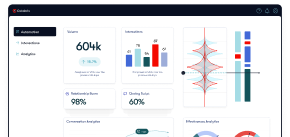
Customer journey optimization refers to the process of enhancing the interactions and experiences that customers have with a brand throughout their entire journey. This involves analyzing customer touchpoints, understanding their needs, and implementing strategies to improve satisfaction and loyalty.
Understanding the Customer Journey
The customer journey encompasses all the interactions a customer has with a brand, from initial awareness to post-purchase support. Mapping this journey is crucial for identifying areas of improvement and ensuring a seamless experience.
Stages of the Customer Journey
The customer journey can be divided into several key stages:
- Aware: The customer becomes aware of a brand or product.
- Consideration: The customer evaluates options and considers making a purchase.
- Purchase: The customer completes the transaction.
- Retention: The brand engages the customer post-purchase to encourage repeat business.
- Advocacy: Satisfied customers promote the brand to others.
Importance of Customer Journey Mapping
Mapping the customer journey allows organizations to visualize the entire experience from the customer’s perspective. This insight is essential for identifying pain points and opportunities for enhancement. By understanding how customers interact with various touchpoints, businesses can tailor their strategies to meet customer expectations effectively.
Key Components of Customer Journey Optimization
To optimize the customer journey, several components must be considered. Each plays a vital role in enhancing the overall experience.
Data Analytics
Data analytics is fundamental in understanding customer behavior. By analyzing data from various sources, businesses can gain insights into customer preferences and pain points. This information is crucial for making informed decisions about where to focus optimization efforts.
Personalization
Personalization involves tailoring experiences to meet individual customer needs. By leveraging data, brands can create personalized marketing messages, product recommendations, and customer support interactions. This approach not only enhances customer satisfaction but also fosters loyalty.
Omnichannel Experience
Providing a seamless omnichannel experience is essential for customer journey optimization. Customers expect to interact with brands across multiple channels, including online, in-store, and via mobile devices. Ensuring consistency across these channels enhances the overall experience and builds trust.
Benefits of Customer Journey Optimization
Investing in customer journey optimization yields numerous benefits for businesses. These advantages can significantly impact overall performance and customer satisfaction.
Increased Customer Satisfaction
By addressing pain points and enhancing the customer experience, businesses can significantly increase customer satisfaction. Satisfied customers are more likely to return and recommend the brand to others, driving growth.
Higher Conversion Rates
Optimizing the customer journey can lead to higher conversion rates. When customers have a positive experience, they are more likely to complete purchases and engage with the brand further.
Improved Customer Retention
Customer journey optimization fosters loyalty and retention. By providing exceptional experiences, brands can encourage customers to return, reducing churn rates and increasing lifetime value.
Implementing Customer Journey Optimization Strategies
To effectively implement customer journey optimization strategies, organizations must take a structured approach. This involves several key steps.
Benchmarking Performance
As highlighted by Bob Hale, CEO of Alterian, benchmarking is crucial for understanding how a brand’s customer experience measures up against competitors. Without this insight, organizations may struggle to identify areas for improvement.
Utilizing Customer Feedback
Gathering and analyzing customer feedback is essential for understanding their experiences. Surveys, reviews, and direct feedback can provide valuable insights into what customers value and where improvements are needed.
Continuous Improvement
Customer journey optimization is not a one-time effort; it requires continuous monitoring and improvement. Organizations should regularly assess their strategies and make adjustments based on evolving customer needs and market trends.
FAQs
What is the purpose of customer journey optimization?
The purpose of customer journey optimization is to enhance the overall customer experience by identifying and improving key touchpoints throughout the customer journey.
How can data analytics improve customer journey optimization?
Data analytics provides insights into customer behavior and preferences, allowing businesses to tailor their strategies and improve the customer experience effectively.
What role does personalization play in customer journey optimization?
Personalization enhances customer satisfaction by tailoring experiences to individual needs, which fosters loyalty and encourages repeat business.
Why is an omnichannel experience important?
An omnichannel experience ensures consistency across all customer interactions, which builds trust and enhances the overall customer journey.
How can businesses measure the success of their customer journey optimization efforts?
Businesses can measure success through key performance indicators (KPIs) such as customer satisfaction scores, conversion rates, and customer retention rates.
Take Your Customer Journey to New Heights with Calabrio
Optimizing your customer journey is just the beginning. With Calabrio’s unified platform, experience a seamless blend of functionality and simplicity that drives real results. Say goodbye to complex systems and hello to a solution that brings a 19% improvement in answer rates, an 80% reduction in handle time, and a 20% increase in scheduling efficiency. Don’t let your contact center settle for less. Book a demo today and embark on a journey towards unparalleled customer experiences with Calabrio.