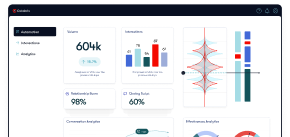
AI-powered Quality Management (QM) is rapidly transforming the way contact centers approach performance, customer experience, and agent coaching. During our recent webinar on Auto QM, we heard from dozens of contact center leaders eager to understand what this technology means for their teams, their customers, and their business outcomes.
At its core, Auto QM brings scale, speed, and consistency to the traditionally manual and subjective process of quality evaluation. By automatically analyzing 100% of interactions — across voice and digital channels — Auto QM empowers organizations to uncover hidden performance issues, identify coaching opportunities, and drive measurable improvements in customer satisfaction. With embedded AI and machine learning, it eliminates bias, increases accuracy, and frees up time for supervisors and analysts to focus on strategic initiatives rather than routine scoring.
In this post, we’ll address some of the most common themes and concerns that surfaced during the webinar, providing clarity on accuracy, transparency, customization, and the future of AI-driven QM.
Accuracy Across Languages, Channels, and Industries
When implementing Auto QM, one of the first concerns is accuracy. How well does it transcribe calls? Can it handle multiple languages or industry-specific jargon?
The truth is, modern AI can achieve exceptional accuracy, but it depends on strong baseline data, human oversight, and continuous tuning. Multi-language support and differentiation between call types (like sales versus service) are increasingly standard features. Still, success hinges on pairing the right AI with experienced analysts who can guide and improve its performance over time.
Connecting AI Insights to Business Outcomes
Another key theme that emerged during our conversation was around impact: How does Auto QM drive top-line revenue, improve customer lifetime value, or boost profitability?
When integrated into a broader analytics ecosystem, Auto QM becomes far more than a compliance tool. By correlating evaluation results with customer journey analytics, you can tie agent coaching and performance to concrete business outcomes. The data becomes a strategic asset — fueling targeted training, identifying upsell potential, and revealing trends that directly affect customer loyalty and operational costs.
Control, Transparency, and Trust
Contact center leaders shared another common concern, and rightly so: How can you maintain control and transparency?
For starters, good Auto QM solutions provide the ability to amend scores, create manual review workflows, and grant agents access to their evaluations.
However, customization features — like assigning specific evaluation forms to different teams or using AI logic to pick the right scoring criteria — should also be available and easy-to-use in order to build trust with agents while improving operational efficiency. Ultimately, AI should be seen as an augmentation of human expertise, not a replacement for oversight.
Getting Started and Ongoing Support
Leaders also want to know: How quickly can Auto QM deliver value? How long does it take for the AI to learn, and what resources are available along the way?
Typically, organizations see strong early results in weeks — though continuous data input and feedback loops are key to unlocking its full potential. Packaging and update policies vary, but at Calabrio, we’re committed to transparency around what’s included and what additional modules might be needed to meet specific goals.
Looking Ahead: The Future of Auto QM
As the technology evolves, we’re focused on deepening contextual understanding, supporting additional languages and channels, and finding new ways to connect Quality Management directly to business strategy.
Challenges remain — particularly in balancing automation with human oversight and safeguarding customer privacy — but the path forward is promising. We’re excited to continue building solutions that help contact centers shift from reactive compliance to proactive strategy.