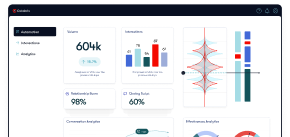
Contact center workforce optimization (WFO) refers to the strategies and technologies used to enhance the efficiency and effectiveness of contact center operations. This involves managing human resources, technology, and processes to improve customer interactions and overall service delivery.
Understanding Workforce Optimization
Workforce optimization encompasses a variety of practices aimed at maximizing the productivity of contact center agents while ensuring high-quality customer service. It integrates various components, including scheduling, performance management, and training, to create a cohesive operational strategy.
Key Components of Workforce Optimization
Workforce optimization is built on several key components that work together to enhance contact center performance:
- Scheduling: Effective scheduling ensures that the right number of agents are available at peak times, reducing wait times and improving service levels.
- Performance Management: Monitoring agent performance through metrics and KPIs helps identify areas for improvement and recognize high achievers.
- Training and Development: Continuous training programs equip agents with the necessary skills to handle customer inquiries effectively.
- Quality Assurance: Regular assessments of customer interactions ensure that service standards are met and maintained.
The Role of Technology in Workforce Optimization
Technology plays a crucial role in workforce optimization, enabling contact centers to streamline operations and enhance agent productivity. Advanced tools and software solutions are essential for managing various aspects of workforce optimization.
AI and Automation
Artificial intelligence (AI) and automation are transforming the landscape of contact center operations. By automating routine tasks, AI allows agents to focus on more complex customer interactions, thereby improving overall efficiency.
According to recent studies, access to AI assistance can increase worker productivity by an average of 15% (source: arXiv). This significant boost underscores the importance of integrating AI technologies into workforce optimization strategies.
Data Analytics
Data analytics provides valuable insights into customer behavior and agent performance. By analyzing interaction data, contact centers can make informed decisions regarding staffing, training, and process improvements.
For instance, the US Bureau of Labor Statistics reports that companies optimizing their workforce can achieve productivity increases upwards of 15% (source: Market Research Future).
Impact on Customer Experience
Workforce optimization directly influences customer experience by ensuring that agents are available and equipped to handle inquiries efficiently. When agents are well-prepared and supported by technology, customers benefit from shorter wait times and more effective service delivery.
Agent Availability and Response Times
Effective workforce optimization strategies lead to improved agent availability, which is critical for maintaining high service levels. When agents are properly scheduled and supported, customers experience reduced wait times, enhancing their overall satisfaction.
Research indicates that 65% of contact centers have deployed some form of AI technology to improve customer experience (source: WifiTalents), highlighting the industry’s commitment to leveraging technology for better service outcomes.
Handling High-Stakes Interactions
While chatbots and automated systems are increasingly prevalent, voice remains the preferred channel for high-stakes, emotionally charged, or time-sensitive queries (source: TechRadar). Workforce optimization ensures that skilled agents are available to handle these critical interactions, providing a human touch when it matters most.
Challenges in Workforce Optimization
Despite the benefits, implementing effective workforce optimization strategies can present challenges. Contact centers must navigate various obstacles to achieve their optimization goals.
Balancing Cost and Quality
One of the primary challenges in workforce optimization is balancing cost efficiency with service quality. While reducing operational costs is essential, it should not come at the expense of customer satisfaction.
Contact centers must carefully analyze their staffing models and technology investments to ensure they are achieving the desired balance. This often requires ongoing adjustments and a commitment to continuous improvement.
Managing Agent Turnover
High agent turnover can significantly impact workforce optimization efforts. Frequent turnover disrupts service continuity and can lead to increased training costs.
To mitigate this issue, contact centers should focus on creating a positive work environment, offering competitive compensation, and providing opportunities for career advancement. These strategies can help retain talent and maintain a skilled workforce.
Conclusion
In summary, contact center workforce optimization is a multifaceted approach that combines technology, data analytics, and effective management practices to enhance operational efficiency and customer satisfaction. By leveraging AI, optimizing scheduling, and focusing on agent development, contact centers can navigate the complexities of modern customer service and deliver exceptional experiences.
FAQs
What is the primary goal of workforce optimization in contact centers?
The primary goal of workforce optimization is to enhance the efficiency and effectiveness of contact center operations, ensuring that agents are available and equipped to provide high-quality customer service.
How does AI contribute to workforce optimization?
AI contributes to workforce optimization by automating routine tasks, providing data analytics, and enhancing agent productivity, ultimately leading to improved customer interactions.
What challenges do contact centers face in workforce optimization?
Contact centers face challenges such as balancing cost and quality, managing agent turnover, and ensuring that technology is effectively integrated into their operations.
Why is voice still important in contact centers?
Voice remains important in contact centers for handling high-stakes, emotionally charged, or time-sensitive queries, where human interaction is crucial for customer satisfaction.
How can workforce optimization improve customer experience?
Workforce optimization improves customer experience by ensuring that agents are available, well-trained, and supported by technology, leading to shorter wait times and more effective service delivery.
Optimize Your Contact Center with Calabrio
Transform your contact center’s performance with Calabrio’s perfect blend of simplicity and power. Experience firsthand how our intuitive platform can lead to significant improvements in answer rates, handle time, and scheduling efficiency. Don’t settle for the limitations of other solutions. Book a demo today and join the ranks of organizations that have elevated their customer experience with Calabrio’s unified approach to workforce optimization.