Voice of the Agent

In partnership with Get Out of Wrap, Calabrio asked 540 contact center agents about their realities, revealing powerful insights into empathy, AI, and the future of work.
  

The contact center is changing and so is the agent behind every interaction.

This year’s research reveals a workforce in transition. Once seen as a stepping stone role defined by scripts, stress, and high turnover, today’s contact center agents are problem solvers, brand ambassadors, and emotional anchors in moments that matter most.


Agents are now handling fewer transactional queries and more emotionally charged, high-stakes conversations – the kind that define customer loyalty. As automation takes over routine tasks, empathy and emotional intelligence have become their greatest assets. In this changing landscape, our report offers key insights into the agent experience, including:

Whether agents see a long-term future in the contact center

Why well-being is now the ultimate retention strategy

What agents understand (and don’t) about AI

How culture, coaching, and career paths will shape the future workforce

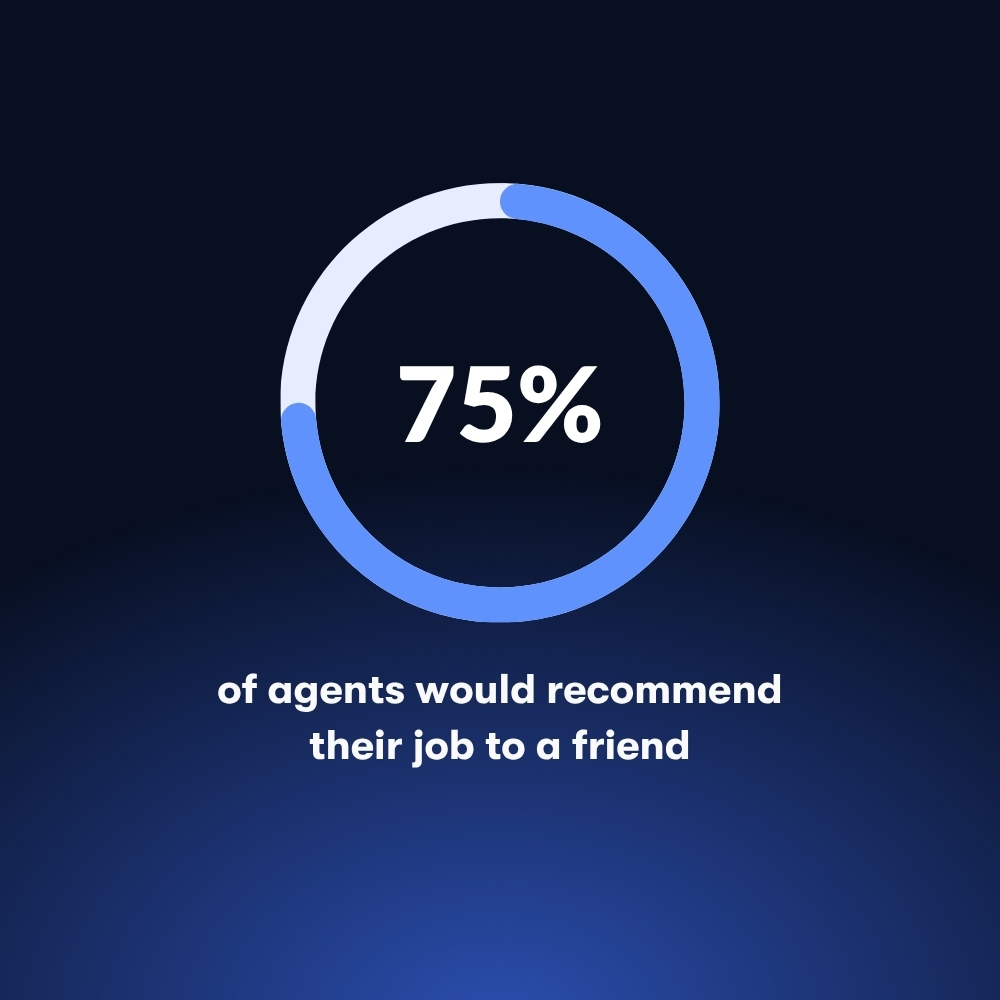
75%

of agents would recommend their job to a friend – showing rising pride in the profession.

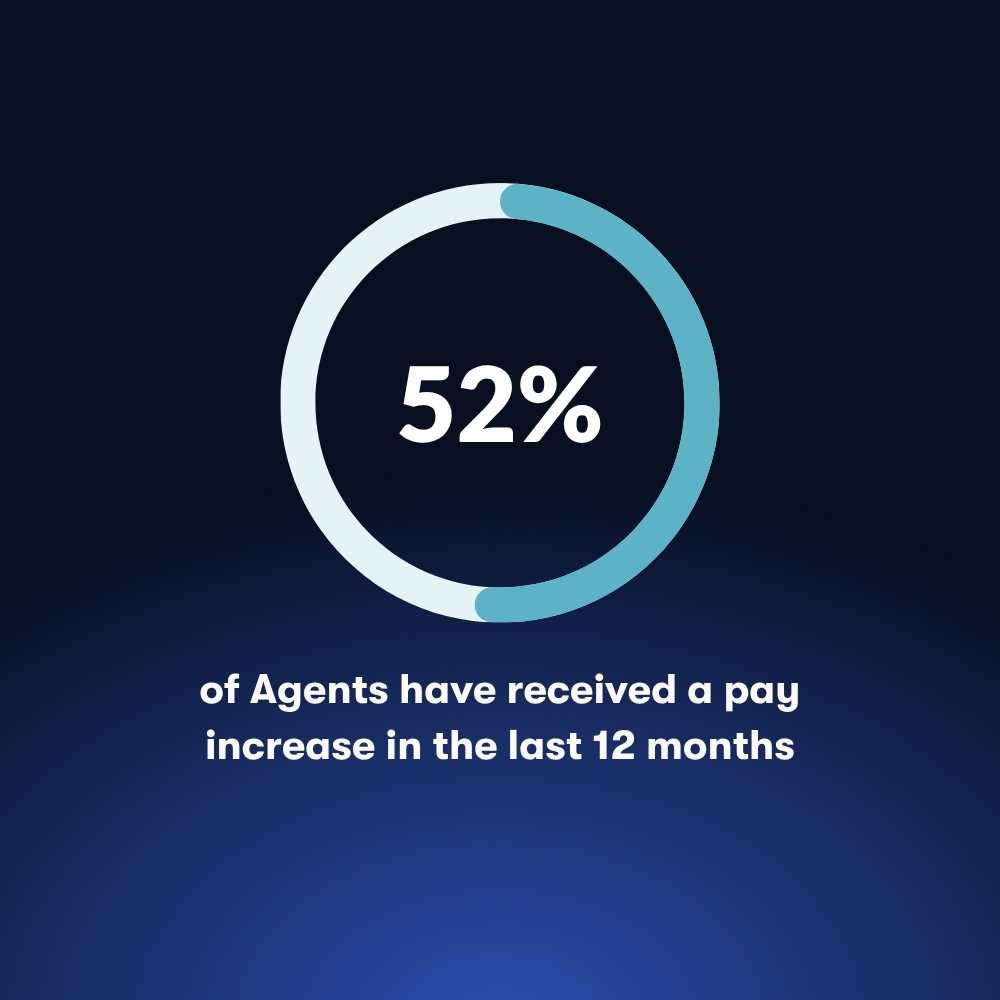
52%

of agents received a pay rise in the past 12 months – down sharply from 79% last year.

11%

of agents say their job isn’t stressful at all – highlighting the growing strain of customer-facing work.

#1

reason agents consider leaving: pay and benefits, tied with stressful workloads and burnout.

70%

of agents receive coaching or training at least monthly

Empathy

The area agents felt the least improvement was required.
Evolving Perceptions: A Workforce in Transition

The contact center agent role is being reimagined. Once defined by stress and high turnover, it’s now seen as a skilled, meaningful career built on empathy and connection. 75% of agents would recommend their job to a friend, and 68% say they’re proud to work in the industry. As automation reduces routine tasks, agents are gaining space to focus on creativity, problem-solving, and customer care. Yet, one in three remain uncertain about their long-term future – showing that clearer career growth and stronger recognition are key to sustaining progress.

The Cost of Caring: Empathy in the Age of AI

AI hasn’t replaced agents, it’s made them more indispensable. As automation takes over routine tasks, agents have become the emotional core of customer experience – relied on for empathy, connection, and composure under pressure. But that strength comes with strain. Only 11% of agents say their job isn’t very stressful, while many identify resilience and stress management as the #1 area for improvement. Burnout and workload pressure now share the top spot as reasons agents consider leaving their roles.


And while 75% of agents view empathy as the area they need the least training in, our State of the Contact Center research shows leaders see it as what’s most lacking, revealing a growing disconnect between confidence and support.

The AI Knowledge Gap: Curiosity Meets Caution

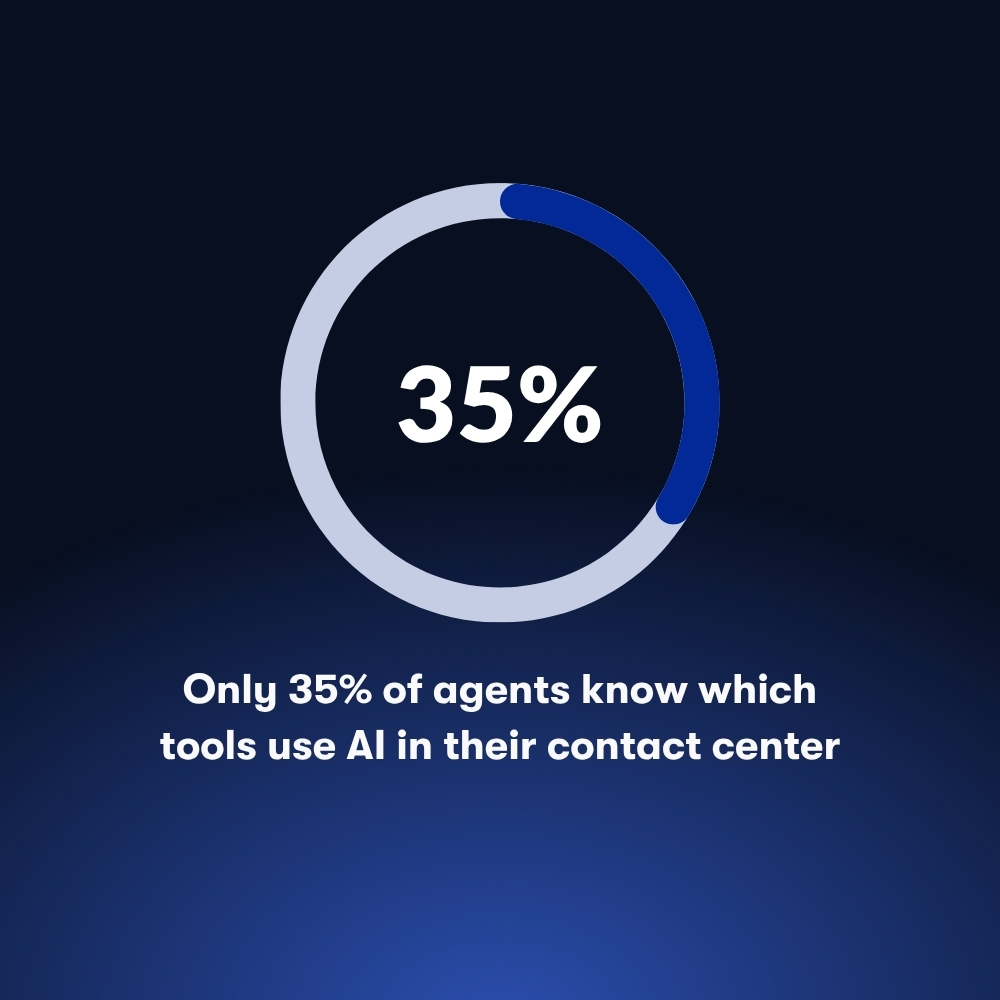
AI is everywhere in the contact center, but understanding hasn’t kept pace. Only 35% of agents know which tools use AI in their contact center, and while 44% find it helpful, many remain uncertain about its role. Agents aren’t resistant – they’re unsure. They want clarity, transparency, and training to trust and take full advantage of the technology.


Over 60% of Gen Z and Millennials already use tools like ChatGPT or Gemini, yet they’re also the most anxious about AI’s impact. Older generations remain cautious or disconnected. Closing this gap means meeting agents where they are, with tailored education and open communication that position AI as an ally, not a threat.

When Pay Can’t Rise, Support and Growth Must

With pay increases slowing (52%, down from 79%), what truly keeps agents engaged is how supported they feel. Supportive leadership now ranks equally with fair pay (59%) as a driver of happiness, proving that connection and care can carry real weight when budgets can’t.


The data shows progress: more regular one-to-ones (67%), consistent coaching (70%), and approved time-off requests (77%), signals of growing trust and empathy. But when pay can’t stretch further, opportunity must. With pay and burnout tied as top reasons for leaving, clear career paths, recognition, and development are what turn jobs into lasting careers.

Download Your Copy

Join us in shaping a future where the contact center isn’t just a job, it’s a career agents can truly be proud of.