The quality management software market has reached a critical inflection point. Contact centers that once relied on manual evaluations and spreadsheet-based coaching now face an industry crowded with sophisticated platforms, each claiming superiority. While EvaluAgent has established itself as a capable solution for agent performance management, assuming it’s the right fit for every organization would be shortsighted.
Your choice of QM software directly impacts agent performance, customer satisfaction scores, and operational efficiency. The wrong platform doesn’t just waste budget; it creates friction in your workflows, generates compliance risks, and ultimately drives talented agents to seek opportunities elsewhere. Meanwhile, the right solution transforms quality management from a necessary evil into a strategic advantage that differentiates your contact center from competitors.
This comprehensive analysis examines eight alternatives to EvaluAgent that deserve serious consideration in 2025. We’ve evaluated each platform across critical dimensions: integration capabilities with modern CCaaS systems, AI-powered analytics depth, scalability for growing operations, and real-world implementation success rates. Some excel at automated quality scoring, others prioritize agent engagement through gamification, and several offer unified workforce optimization that extends beyond traditional QM boundaries.
Here is the best and worst of the top EvaluAgent competitors.
The Best EvaluAgent Alternatives in 2025
- Calabrio ONE: Unified Workforce Engagement
- Kaizo: AI-Driven Performance
- Talkdesk: Omnichannel Powerhouse
- Balto: Real-Time Call Guidance
- Scorebuddy: Scalable QA Intelligence
- Convin.ai: AI-Powered Conversation Coaching
- NiCE CXone Mpower: Enterprise-Grade AI Suite
- Genesys Cloud CX: AI-First CX Orchestration
Let’s look at each in detail:
1. Calabrio ONE: Unified Workforce Engagement
What it does: Calabrio ONE is a workforce engagement platform that helps contact centers manage QA, coaching, analytics, and scheduling in one cloud-based system.
Who it is for: It’s built for contact center leaders, QA managers, workforce planners, and customer experience teams who want AI-powered automation, better agent performance, and full visibility across interactions.
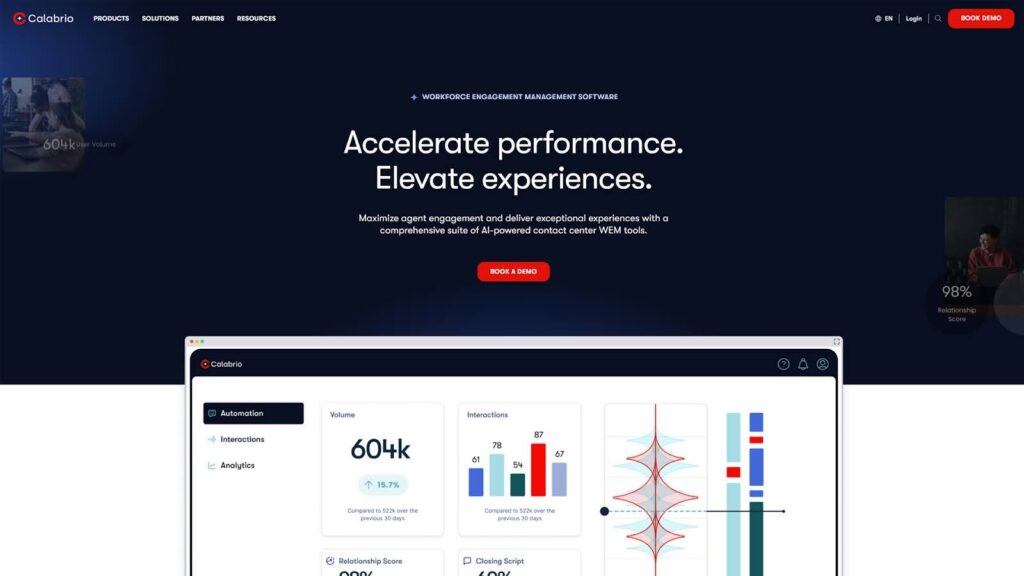
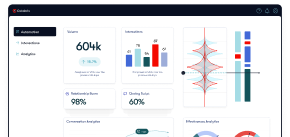
If you want to manage your contact center with fewer tools and more insight, Calabrio ONE makes it possible. The platform gives you a full view of performance, quality, and sentiment, without bouncing between dashboards.
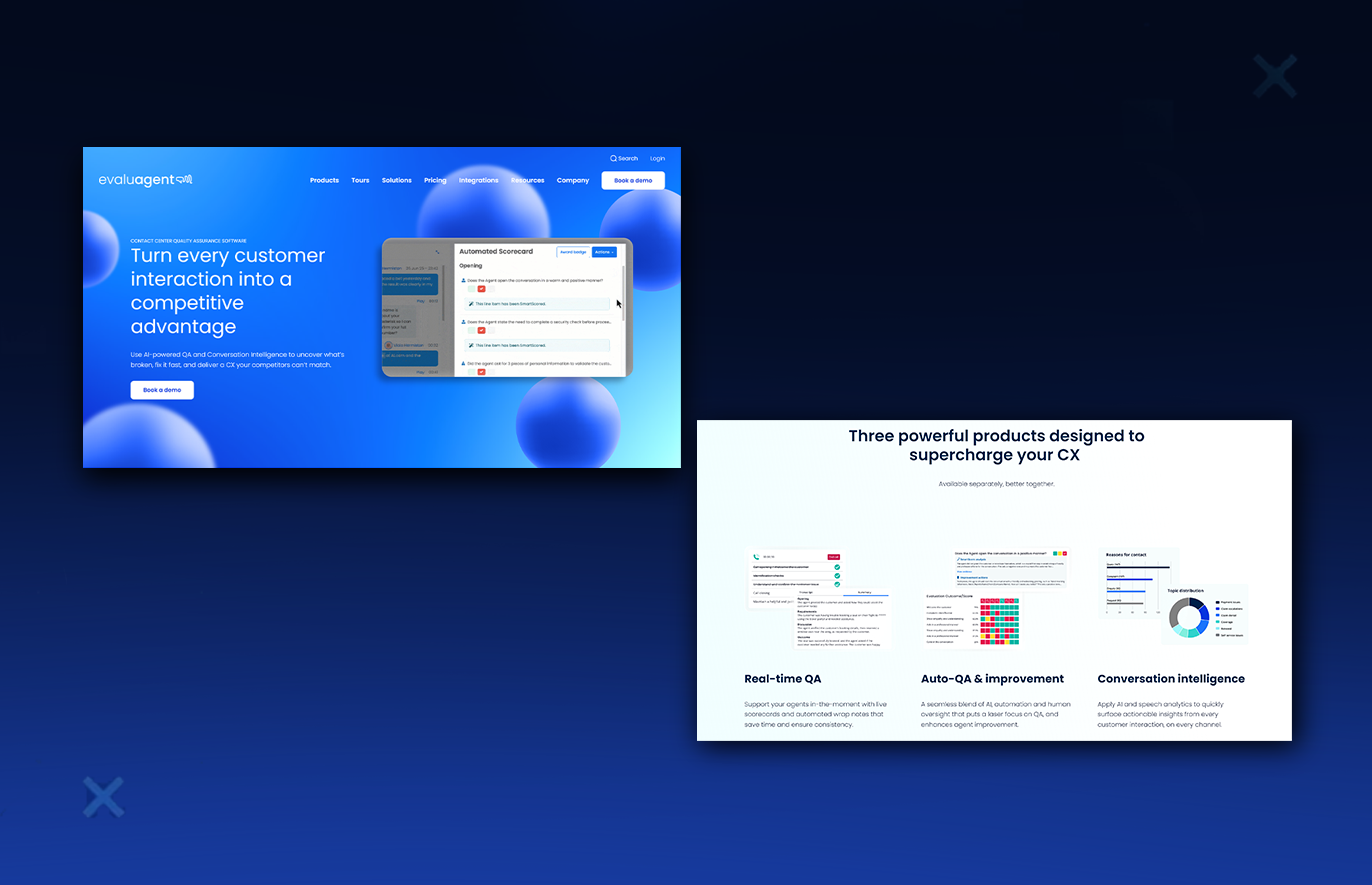
EvaluAgent is great for quality assurance and coaching, but it stops there. Calabrio adds the workforce management layer, so you can forecast demand, create optimized schedules, and track adherence, all in the same dashboard.
You’re not just checking QA boxes, you’re managing your entire team in one system.
Calabrio’s conversation intelligence tools are thorough and consistently helpful. The call recording and quality monitoring tools are fully connected. You can review interactions quickly, and AI analytics surface the calls that matter most, no need to listen to every minute of audio.
The system highlights emotionally charged or high-risk calls, letting your QA team focus where it really counts. You also get speech and text analytics that automatically flag coaching moments, complaints, or emerging customer issues.
These insights feed directly into the coaching module, where you can assign training tasks, schedule feedback sessions, and track progress, all in one place. If your goal is to deliver actionable, data-backed coaching, Calabrio makes that easy.
The platform also boosts agent engagement. Agents can log in, see their own metrics, track progress, and receive feedback in real time. That kind of transparency motivates performance.
While the platform is powerful, it can feel complex at first, especially when setting up custom reports or workflows. But the onboarding process is strong, and there are templates that help you get started faster.
You can connect Calabrio with Salesforce, Zendesk, Amazon Connect, and more using native integrations or open APIs. This makes your contact center workflows even smoother, especially across multiple channels.
If you’re in a regulated industry, Calabrio is built with that in mind. You get encrypted call recordings, strong access controls, and detailed audit trails, ideal for healthcare, finance, or government use.
In short, compared to EvaluAgent, Calabrio gives you more coverage, stronger automation, and better visibility, all without needing separate tools for WFM, QA, or coaching.
Pros
- All-in-one WEM Platform (WFM, QA, Coaching, Analytics): Calabrio replaces multiple disconnected tools. You manage agent performance, scheduling, QA, coaching, and analytics in one connected system, no platform-hopping or manual sync needed.
- Advanced AI-Powered Analytics: Speech and text analytics automatically flag complaints, coaching moments, and emotional spikes in customer conversations. This lets your QA team skip the noise and focus on the calls that matter most.
- Strong WFM + QA integration: Unlike tools like EvaluAgent, Calabrio adds full workforce management with demand forecasting, real-time adherence, and auto-scheduling. You can align staffing with QA insights, a rare combination that drives both efficiency and quality.
- Actionable Coaching Built Into Workflows: QA insights flow directly into coaching modules, letting you assign tasks, give feedback, and track agent development, all without exporting data or using separate systems.
- Agent Visibility and Engagement Tools: Agents can view their performance dashboards, track goals, and receive feedback instantly. This boosts transparency, increases accountability, and improves motivation across the team.
- Enterprise-Grade Compliance and Security: Built for industries like healthcare, finance, and public sector, Calabrio includes HIPAA-compliant recording, full audit trails, and granular access controls, making it a go-to for regulated environments.
- Flexible Integrations with CRM and CCaaS Platforms: Connect easily to systems like Salesforce, Zendesk, and Amazon Connect using native integrations or APIs, helping you build end-to-end workflows without engineering overhead.
- Modern, Intuitive Interface for Managers and Agents: The UI is clean and responsive, with clear reporting, dashboards, and task flows. While setup may take time, daily use is fast, intuitive, and designed to scale with your team.
Cons
- Initial setup takes time
- Advanced reporting needs configuration
- Some learning curve for smaller teams
If you want a full-suite alternative to EvaluAgent that adds WFM, deeper analytics, and robust compliance tools, Calabrio ONE delivers. It’s ideal for scaling teams who want everything in one place with strong automation.
Calabrio ONE helps you manage contact centers more effectively with its vast range of features. Schedule a demo to learn more today.
2. Kaizo: AI-Driven Performance
What it does: Kaizo automates quality assurance, provides real-time agent performance insights, and improves coaching using AI-powered tools designed specifically for Zendesk and Salesforce-based support teams.
Who it is for: Support managers, QA leads, and team supervisors working in medium to large organizations that rely on Zendesk or Salesforce and want real-time visibility and automation across their service operations.
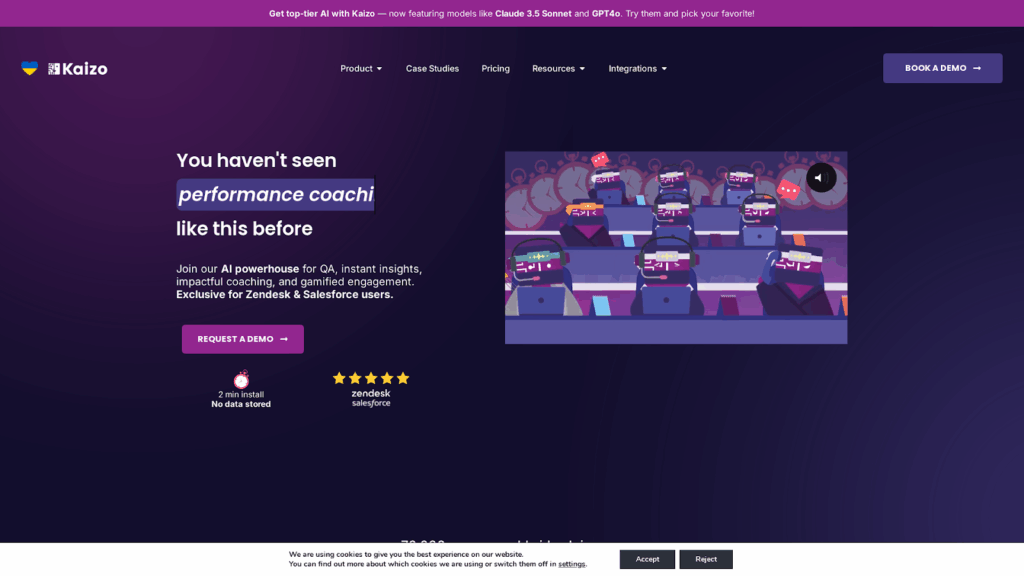
If you’re using Zendesk or Salesforce and want to automate QA across every ticket, Kaizo is built for you. Its AI scores interactions based on sentiment, empathy, and root cause, so you don’t have to manually review everything.
The live scorecards give you over 50 real-time metrics (from CSAT to resolution time) which makes it easier to spot issues and respond fast. Kaizo also improves coaching with workflow suggestions based on actual data. It tells you what to coach, when to do it, and how often.
Agents stay motivated through mission-based gamification, with tasks, avatars, and rewards that add accountability without pressure. The interface is clean, and setup takes just a couple of minutes. It scales smoothly, whether you’re reviewing a few tickets or thousands.
But Kaizo is only compatible with Zendesk and Salesforce. If you use other platforms or support channels outside of email and chat, it won’t fit your stack.
Pros
- Real-time Auto QA
- Gamified coaching system
- Fast 2-minute deployment
Cons
- Limited to Zendesk and Salesforce
- Not suitable for non-digital channels
3. Talkdesk: Omnichannel Powerhouse
What it does: Talkdesk is a cloud-based contact center platform that combines omnichannel support, AI automation, quality management, and workforce engagement into a single solution for modern support teams.
Who it is for: Ideal for mid to large-scale contact centers that need voice and digital support, advanced QA and coaching tools, and integrations with systems like Salesforce, Zendesk, or Slack.
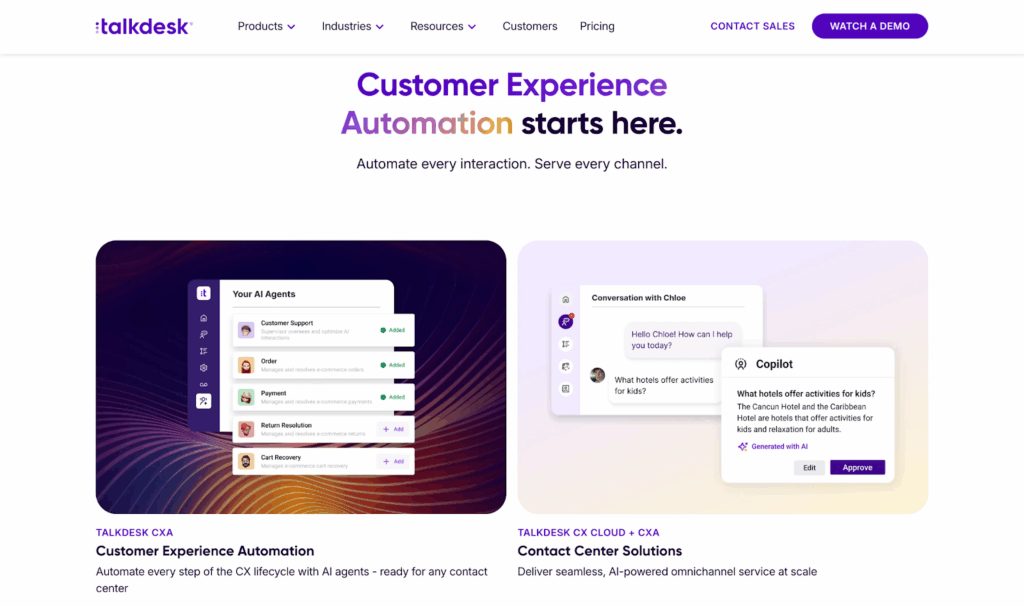
If you’re looking for a complete contact center platform with strong QA tools and omnichannel support, Talkdesk gives you everything in one place. It handles call routing, live chat, email, SMS, and social, all from a unified agent workspace.
The platform is great at quality management. You can record calls and screens, set up automated evaluations, and schedule coaching sessions without using third-party tools.
That said, some teams find that the native WEM suite doesn’t offer the same level of flexibility or depth as a dedicated solution. For organizations that want more advanced forecasting,
customizable scorecards, or deeper performance analytics, integrating Calabrio ONE with Talkdesk can enhance what’s already there. This gives contact centers the ability to fine-tune coaching, empower agents with self-service tools, and surface insights faster, all without replacing their core Talkdesk environment.
The built-in AI evaluator surfaces risky calls automatically, which cuts down manual QA time and helps your team focus on what matters most. You also get real-time dashboards and analytics that show both live and historical data. This helps you track KPIs, manage staffing, and react quickly to performance dips.
The Copilot AI assistant supports agents during live calls with real-time suggestions, helping them solve issues faster and feel more confident.
For workflow creation, Talkdesk offers Studio, a drag-and-drop builder. It works well for basic flows, but if you’re setting up complex IVRs or QA automations, you might need IT support.
However, there are some caveats here. Some users report minor lags in the UI and say that finding certain features takes time. Others are also commenting on the lack of educational data about the platform and there are some users that are highlighting issues with reporting as well.
Talkdesk also stands out with deep integrations. It connects to over 60 tools like Salesforce, Zendesk, and Slack, and offers APIs if you want to build custom workflows. With optional Copilot and WEM add-ons, it can be a powerful tool for managing both customer experience and agent performance.
Pros
- All-in-one contact center suite
- AI-powered QA and Copilot
- 60+ deep integrations
Cons
- Onboarding content can be bit better
- Complex setup for advanced workflows
- Some UI lag and feature discovery issues
Talkdesk is a strong EvaluAgent alternative for teams seeking a full-service, omnichannel contact center platform with advanced QA and automation. If you want scalability, deep integrations, and real-time analytics, Talkdesk delivers premium results for the price.
4. Balto: Real-Time Call Guidance
What it does: Balto is an AI-powered assistant that listens to live calls, provides on-screen prompts, flags compliance issues, scores calls automatically, and generates post-call summaries in your CRM.
Who it is for: Perfect for contact centers in regulated industries like finance, insurance, healthcare, or BPOs that need real-time agent guidance, automated QA, and tighter compliance control.

If your agents struggle with staying compliant or sticking to scripts, Balto gives them help in real time. It listens to live calls and displays on-screen prompts, such as rebuttals, reminders, and compliance checklists, while the conversation is happening. This helps new agents speak confidently from day one and reduces compliance violations right away.
The Auto QA system scores every call based on the rules you set. There’s no need to sample calls anymore, you get 100% coverage. Managers get alerts when something’s off and can review short call clips with context. That makes coaching faster and more targeted.
Balto also generates automatic call summaries and syncs them to your CRM. This saves agents time and makes sure post-call notes are complete and consistent.
The interface is clean, but the on-screen pop-ups can feel distracting, especially for agents using a single monitor. Some users also report occasional speech recognition issues, where prompts don’t show up correctly or false flags appear.
Reporting works well for high-level trends, but if you need custom exports or deep drilldowns, you may find it limited. Balto integrates with more than 18 tools and supports HIPAA, PCI, and SOC 2, so it fits easily into secure enterprise environments.
Setup requires some manual steps, but once you’re live, the efficiency and compliance ROI are easy to measure.
Pros
- Real-time agent guidance
- 100% call scoring with alerts
- Auto-note taking in CRM
Cons
- Pop-ups can distract agents
- Limited report customization
- Manual desktop deployment steps
Balto is a powerful EvaluAgent alternative for teams that want real-time QA, instant coaching prompts, and full compliance visibility. It’s ideal for fast-paced, high-volume centers looking to boost revenue and reduce violations in one move.
5. Scorebuddy: Scalable QA Intelligence
What it does: Scorebuddy is a cloud-based QA platform that scores, tracks, and analyzes customer interactions across channels, with AI scoring, coaching, surveys, and robust reporting features.
Who it is for: QA teams, contact center managers, and support leaders across SMBs to large enterprises, especially in BPO, finance, retail, and healthcare, who want deep QA insights, AI automation, and training tools.

Scorebuddy gives you tools to build a strong QA process across calls, chats, and emails. You can create unlimited scorecards with logic-based rules, assign them to teams, and monitor results in real time. There’s no need for developer help, which makes setup simple even for small teams.
The platform also uses AI to auto-score interactions, so you can review more volume without manually checking every ticket. It highlights sentiment shifts, common issues, and patterns in agent behavior, helping you coach based on actual trends instead of guesswork.
Scorebuddy includes built-in coaching tools and an LMS, so you can assign learning tasks directly from QA results. You can track completions and make sure agents close the gaps you’re seeing in performance.
But some users report slow loading during peak hours, especially when pulling large data sets. Others mention dated UI. These issues can slow down QA reviewers during busy periods.
The reporting system works, but it lacks the depth you’d expect, resulting in various users saying that reporting doesn’t meet their needs.
Still, it integrates well with Salesforce, Zendesk, Intercom, Talkdesk, and more. You can use APIs and alerts to automate workflows and connect QA insights with the rest of your CX stack.
Scorebuddy is complete, flexible, and reliable, even though it could improve speed and reporting customization.
Pros
- Unlimited scorecard customization
- AI-powered QA and insights
- Integrated coaching and surveys
Cons
- Slow loading on large data sets
- Limited export/custom report filtering
- Occasional input loss from timeouts
Scorebuddy is a well-rounded EvaluAgent alternative built for teams needing scalable QA, built-in coaching, and AI-driven insights. While reporting flexibility and performance can improve, its deep feature set, great support, and ease of use make it a strong choice.
6. Convin.ai: AI-Powered Conversation Coaching
What it does: Convin.ai records, transcribes, and analyzes every customer interaction to automate QA, deliver coaching insights, track compliance, and boost agent performance across voice, chat, and email.
Who it is for: Contact center leaders, sales managers, QA teams, and trainers in support-heavy sectors like finance, BPO, healthcare, and SaaS looking to scale QA and improve training.
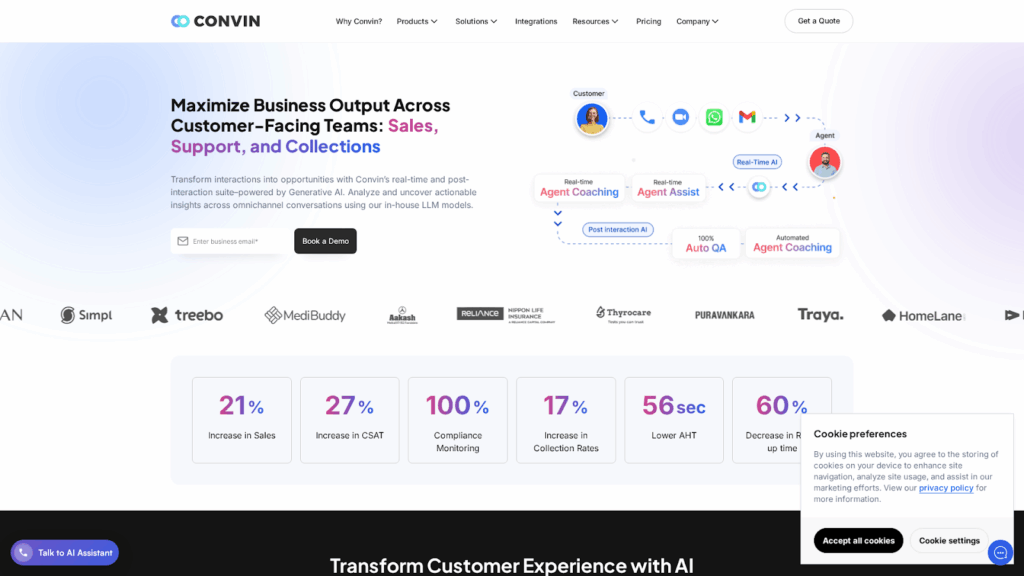
If you want to stop manually reviewing calls and chats, Convin.ai gives you 100% interaction coverage with AI. It flags issues in sentiment, behavior, and compliance, so you can focus on fixing what matters without wasting time.
You can build custom QA scorecards using a drag-and-drop builder. The system also creates automated coaching suggestions based on how your top agents perform, helping you coach low performers more efficiently.
It includes an LMS module for assigning lessons and tracking completions. That makes it easy to connect QA results to real training action. Some users mention occasional AI errors in classification, so light manual review may still be needed.
Convin also offers real-time agent assist, helping reps during live calls with prompts, CRM auto-logging, and follow-up messages sent by email or SMS. Agents can even use the mobile app to check feedback or complete lessons on the go.
Performance is solid, but the system can slow down with large data loads, especially when working with complex dashboards. Users also talk about the accuracy issues in their AI audits which leave a lot to be desired.
It integrates well with tools like Aircall, Salesforce, HubSpot, and more. Overall, Convin makes it easier to track performance, coach smarter, and scale QA as your team grows.
Pros
- 100% AI-driven QA coverage
- Personalized, automated coaching
- Real-time agent support + mobile app
Cons
- Occasional AI recognition errors
- Slower performance at large scale
- Some navigation complexity
Convin.ai is a feature-rich EvaluAgent alternative for teams wanting full QA coverage, intelligent coaching, and real-time agent support. With flexible pricing, strong integrations, and measurable ROI, it’s a solid pick, especially for fast-growing, high-volume teams.
7. NiCE CXone Mpower: Enterprise-Grade AI Suite
What it does: CXone Mpower is a unified, AI-first contact center platform that manages omnichannel customer interactions, workforce engagement, quality assurance, and analytics in one cloud-native system.
Who it is for: Ideal for enterprise contact centers in sectors like finance, healthcare, BPOs, or government that need scalable AI automation, real-time QA, and workforce optimization across channels.

CXone Mpower gives you a full-featured contact center in one platform. You can route, monitor, record, and evaluate all interactions across voice, chat and social, while managing agents and bots from the same workspace.
Its AI tools help reduce manual work, identify issues instantly, and improve CX at scale.
You get deep workforce management, including forecasting, scheduling, and real-time adherence tracking.
QA teams can evaluate interactions with live monitoring, coaching tools, and agent dashboards. Analytics tools offer real-time and historical views, but advanced reporting and IVR setup come with a steep learning curve that takes time to master.
The platform supports 400+ APIs and integrates with top CRMs, WEM suites, and cloud services. AI features like Copilot and Autopilot automate tasks, while supervisors can jump into calls or review KPIs instantly.
Many users also report struggling with “ghost calls and audio delay.” Despite some setup friction and support delays, CXone Mpower delivers a high-impact solution for contact centers aiming to scale with AI and maintain full control over performance, compliance, and customer experience.
Pros
- Unified CCaaS + WEM + AI automation
- Enterprise-grade scalability and compliance
- 400+ API integrations
Cons
- Complex, high-cost pricing tiers
- Steep learning curve for IVR/reporting
- Infrequent session timeouts and support delays
NiCE CXone Mpower is a powerful EvaluAgent alternative for enterprises needing AI, WEM, and omnichannel control in one system. It’s built for scale and automation, though the complexity and cost require a strategic investment mindset.
8. Genesys Cloud CX: AI-First CX Orchestration
What it does: Genesys Cloud CX is a unified, AI-powered platform for managing customer interactions, agent performance, and workforce operations across voice, chat, SMS, email, and social channels, all in one system..
Who it is for: Ideal for mid-size to enterprise organizations in finance, healthcare, BPO, and government that want to scale omnichannel support, automate workflows, and unify CX and workforce management.
Genesys Cloud CX gives you full omnichannel control, combining routing, IVR, messaging, and predictive engagement under one interface.
I found its agent Copilot helpful in live calls, automating knowledge prompts and reducing handle times. You can handle inbound, outbound, and digital seamlessly with context carried across channels.
You also get built-in workforce engagement tools, including forecasting, scheduling, adherence, QA, and gamification. Supervisors can monitor performance live and assign coaching sessions.
However, the drag-and-drop Architect for workflows comes with a learning curve, especially for advanced flows or journey orchestration.
AI and analytics are a major strength. The platform tracks sentiment, behavior, and journey progression, helping you personalize both service and training.
But you may want custom reporting flexibility for exports and filtering. Some users even have to end up relying on an outside developer. Some users have also complained that they are now missing features from Genesys Engage that weren’t ported over to Cloud.
Genesys integrates with Salesforce, ServiceNow, Verint, and 3rd-party apps through the AppFoundry. It supports 15+ languages and deploys globally.
Pros
- Unified CX + WEM + AI
- Strong agent assist & journey orchestration
- Scalable architecture with deep integrations
Cons
- Higher pricing tiers
- Learning curve for Architect and workflows
- Limited export/report customization
Genesys Cloud CX is a top-tier EvaluAgent alternative for teams ready to scale with AI, analytics, and omnichannel control. It’s enterprise-grade, flexible, and powerful, best suited for organizations ready to invest in full-service CX transformation.
How We Ranked the Best EvaluAgent Alternatives
The best EvaluAgent alternative in 2025 needs to go beyond basic call scoring. The strongest platforms should:
- Deliver automated QA across 100% of interactions
- Enable effective, insight-driven coaching
- Offer the flexibility to integrate with existing tools and workflows
To identify which platforms actually deliver, over 15 leading quality management and workforce engagement tools were reviewed using a consistent evaluation process. The criteria included:
1. End-to-End QA Automation
EvaluAgent is known for strong auto-scoring, so tools were evaluated on their ability to transcribe, analyze, and score calls, chats, and emails automatically.
- Could the system evaluate 100% of interactions without manual effort?
- Did it flag sentiment issues, compliance risks, or missed objections?
- Were scorecards customizable by channel, team, or priority?
2. Coaching That Drives Action
The ability to act on QA insights was a key factor. Platforms were assessed on how well they connected evaluations to real coaching workflows.
- Did the tool support coaching plans tied to performance data?
- Could managers assign sessions, leave feedback, and monitor outcomes?
- Was there an agent-facing dashboard to support self-improvement?
3. Real-Time Alerts and Agent Assist
Top-tier platforms provide value during the interaction, not just after.
- Were agents prompted in real time with scripts or disclosures?
- Could supervisors receive live alerts on high-risk interactions?
- Did in-call assist tools meaningfully improve agent performance?
4. Reporting That’s Actually Useful
Usable analytics were prioritized over vanity metrics. Each platform’s reporting features were tested for clarity and depth.
- Were reports intuitive, customizable, and exportable?
- Could results be filtered by agent, team, or topic?
- Did the built-in reporting eliminate the need for separate BI tools?
5. Integration with Existing Stack
Interoperability was essential. Tools were checked for compatibility with CRM, helpdesk, and WEM ecosystems.
- Did the platform integrate natively with systems like Salesforce or Zendesk?
- Were APIs or automation tools like Zapier supported?
- Could QA results and coaching notes sync back to other systems?
6. Scalability, User Experience, and Pricing
Platforms were tested under real contact center conditions—high volumes, multiple channels, and large QA teams.
- Was the interface easy to navigate across agents, QA teams, and supervisors?
- Could the system scale without performance issues?
- Was pricing transparent and aligned with the value provided?
Closing Thoughts — Why Calabrio ONE is the Best EvaluAgent Alternative
EvaluAgent set a high bar for automated quality management, but for organizations that want to go further, across coaching, scheduling, analytics, and real-time agent support, Calabrio ONE stands out as the most complete alternative.
It delivers not just automated QA across 100% of interactions, but also the tools to act on those insights with targeted coaching, agent self-service, and predictive workforce planning.
Calabrio doesn’t require a trade-off between power and usability. Its unified platform brings together quality management, workforce management, and conversation intelligence in one intuitive experience.
Whether you’re scaling a team, trying to reduce attrition, or simply aiming for stronger customer outcomes, Calabrio helps you make faster decisions, coach with purpose, and support agents before, during, and after every interaction.
Book a demo today to see how Calabrio ONE can go beyond what EvaluAgent can do for your business.
Frequently Asked Questions
How is Calabrio ONE Different From EvaluAgent?
Calabrio ONE offers full workforce engagement, not just QA. You get built-in WFM, automated analytics, coaching tools, and compliance features in one dashboard. EvaluAgent focuses mainly on QA and coaching, but lacks integrated scheduling, forecasting, and deep AI analytics that Calabrio provides. This makes Calabrio ideal for scaling teams.
Which Platform is Best for Real-Time QA?
Balto leads in real-time QA. It listens to calls live, gives agents in-the-moment prompts, and flags issues instantly. If your team needs instant guidance and full call coverage without delay, Balto works best. It fits regulated industries where compliance and timing are critical.
Can I Use These Tools Without Replacing my CRM or Ticketing System?
Yes. Most alternatives integrate with CRMs like Salesforce and helpdesks like Zendesk. Platforms like Calabrio, Genesys, and Talkdesk offer native integrations and APIs. You won’t need to replace your stack, just connect and sync data to improve QA and coaching workflows.
Which EvaluAgent Alternative Works Best for Zendesk Users?
Kaizo is built specifically for Zendesk and Salesforce. It auto-scores 100% of tickets, provides real-time performance dashboards, and links QA to gamified coaching. If your team runs on Zendesk, Kaizo delivers seamless integration and speed without needing additional tools.
What if I Need Full CCaaS, Not Just QA?
Platforms like Talkdesk, Genesys Cloud CX, and NiCE CXone Mpower go beyond QA. They include contact center features like call routing, IVR, agent assist, and omnichannel support. These tools work best for large teams needing complete CX control across voice and digital.
Which Platform is Easiest to Set Up and Use?
Scorebuddy and Calabrio are beginner-friendly. With both these tools, you get fast onboarding, drag-and-drop scorecard builders, and clean interfaces. If your team is small or new to QA tools, these platforms help you get started quickly without needing IT support or long setup times.
Can I Automate Coaching Based on QA Data?
Yes. Tools like Calabrio, Convin, and Kaizo let you link QA scores to personalized coaching plans. You can assign sessions, track agent progress, and automate follow-ups. This turns feedback into action, helping you boost performance without manual tracking.
What’s the Best EvaluAgent Alternative for Enterprise Compliance?
Calabrio ONE is ideal. It includes encrypted recordings, audit trails, and access controls. Financial, healthcare, and government teams trust it for compliance. If your industry requires strict security and performance oversight, Calabrio fits better than QA-only tools.
How Should I Choose the Right EvaluAgent Alternative?
Start with your needs. If you want all-in-one performance tools, choose Calabrio. For real-time coaching, pick Balto. If your team uses Zendesk, Kaizo works best. For full CCaaS, go with Genesys or Talkdesk. Match features to your tech stack and growth goals.